It usually starts in the rink lobby. Another parent mentions that their older kid trains at MAP Hockey, somebody else says “Membership,” and on the drive home you start wondering whether your Peewee should be doing the same thing. Then you open the website and find Membership, Futures, clinics and a couple of other program names, and the simple question you started with gets harder to answer.
So let’s answer it first and fill in the rest after.
The eligibility line, word for word
MAP Hockey Membership applications are published for “1st year Bantams and older.” That is the line. It doesn’t say “close to Bantam” or “strong Peewees welcome.” It names a classification, and the classification is the one your child plays in.
If your child is a Peewee, Membership is not the program to apply for. MAP points Squirt and Peewee families to a separate program called MAP Futures, which has its own page and its own details. Acceptance into Futures is not acceptance into Membership. They are two different things built for two different stages.
That can feel like a door closing when your child is the one who stays after practice to shoot pucks into an empty net. It isn’t. It’s a door with a clear sign on it, which is more than most programs give you.
Why all the program names blur together

Part of the confusion is that youth hockey sells development in pieces. A summer camp here. A skills coach on Tuesday nights. A strength class at a gym that also runs toddler tumbling. Each one has a name, a page and a sign-up form, and after a while they all sound alike.
Here is how MAP’s pieces sort out. Membership is a year-round training and development program. It is not a team, it is not a camp and it is not a clinic. There is one Membership, with no tiers or upgraded versions to compare. Futures is the program MAP publishes for Squirt and Peewee players. The AAA teams you may have heard about are separate products, and so is FHIT Hockey, which is its own brand.
Once you see it that way, the question stops being “Which of these is best?” and becomes “Which of these is my child actually eligible for right now?” That one has a clean answer.
Is Peewee too early to get this serious?
Plenty of parents ask this, usually right after they’ve watched another family’s calendar fill up with hockey. It’s a fair worry.
Nothing about the Peewee years has to look like a training plan. A lot of kids spend them playing every sport they can, chasing friends around the outdoor rink after school and falling asleep in the back seat after Saturday games. That’s still hockey development, even if nobody writes it down.
What helps is knowing what’s ahead, so you’re planning instead of guessing. When your child reaches the published band, Membership looks like this:
- A year built in two phases: eight off-season months and four in-season months, so training doesn’t stop when team hockey starts.
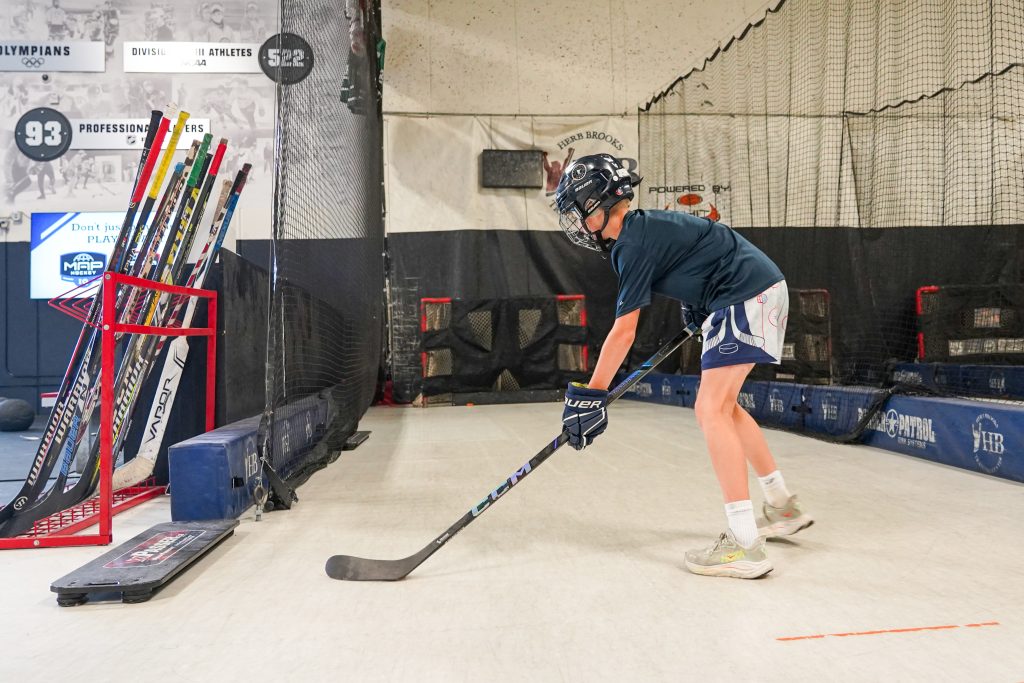
- A training day with three parts: 1 hour of on-ice training, 1 hour of off-ice strength and speed training, and 30 to 45 minutes of shooting and stick handling.
- A maximum of eight players per coach.
Seeing that on paper tends to calm the “are we behind?” feeling. Your child isn’t late for something they aren’t eligible for yet.
What it costs, and why you won’t find it here

The cost question usually comes right after the eligibility question, and sometimes right before it. Hockey is already expensive. Ice, skates that fit for one season, tournament weekends, the gas to get there.
You won’t find a price in this post, and that’s on purpose. Specifics like cost live with the program, and MAP’s campus staff are the right people to walk you through them. If you’re comparing options, write down what you already spend on separate pieces each year. A camp, a skills coach, a gym membership. It makes any conversation about cost a lot more concrete.
Once cost is on the table, sorting out the rest is quick. You don’t need a spreadsheet. You need about ten minutes and the program pages.
- Confirm what classification your child plays in.
- Compare it to the published line: “1st year Bantams and older.”
- If your child is a Peewee, look at MAP Futures.
- If your child fits the band, read the Membership page and how the application works. Every applicant is evaluated by a MAP Hockey instructor before a decision is made, and families hear back within 48 hours. Payment comes after acceptance, not before.
That last part matters more than it sounds. Nobody is asking you to pay for a program before someone qualified has looked at your child.
If you came here wondering whether your Peewee can join MAP Hockey Membership, the short answer is not yet, and that’s fine. The longer answer, including how Futures fits and what Membership looks like when your child gets there, is on the program page. Learn more about MAP Hockey Membership for Peewee families.