Maybe a teammate just made a junior team. Maybe a college game came on TV and you caught yourself watching the defensemen instead of the score. At some point, the next level stops being a someday thing and starts sitting in the back of your mind.
And then the question shows up: what does it actually take? Nobody hands you a checklist. Every team, league and coach is a little different, and anybody who tells you exactly what a future coach wants is guessing.
What you can understand is how the game tends to change as you move up, and what you can start working on now so you’re ready for it.
The game gets faster, and so do the decisions
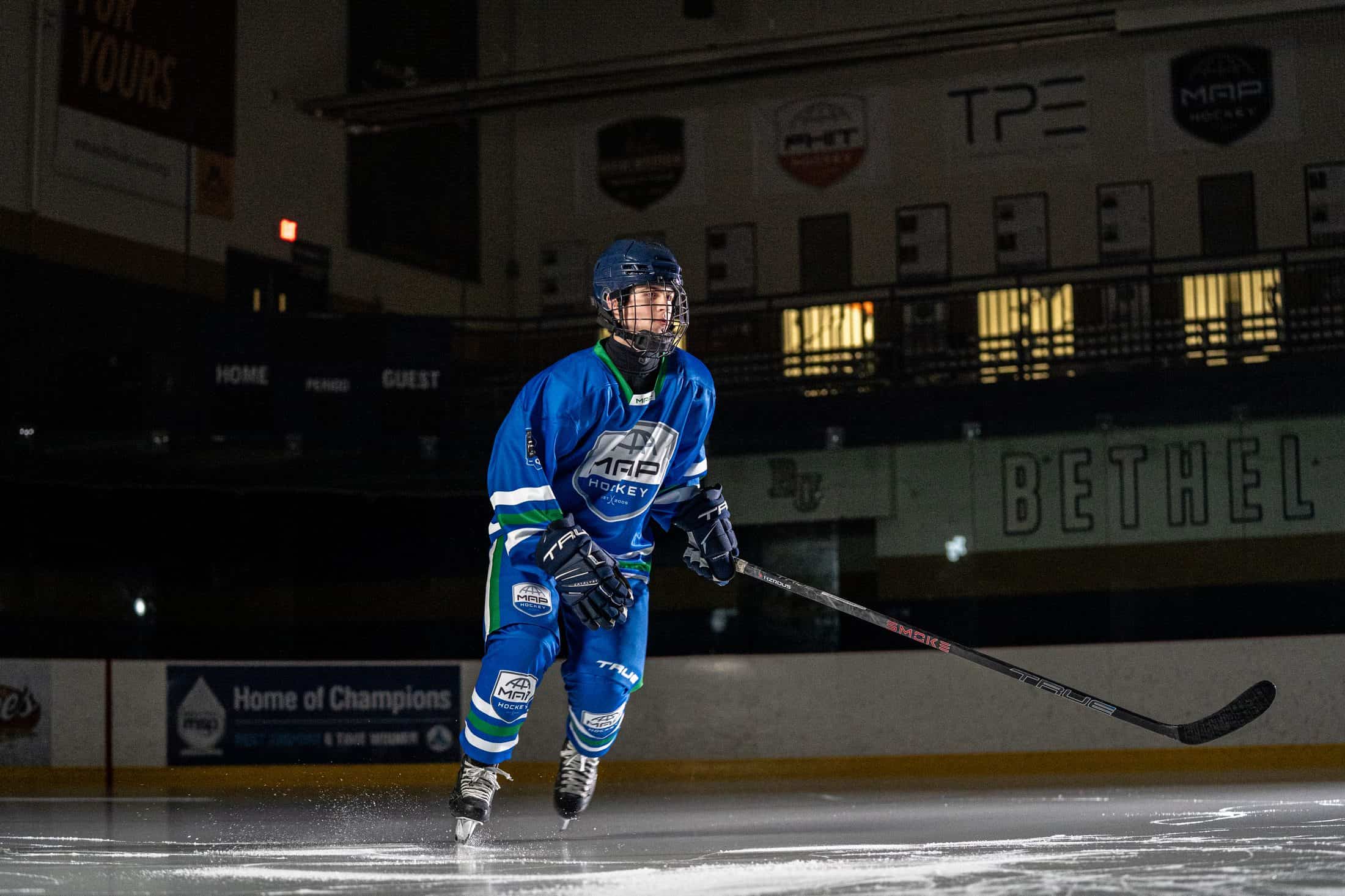
Everybody knows the players get bigger and faster. What players often notice first when they step up, though, is how much less time they have to think.
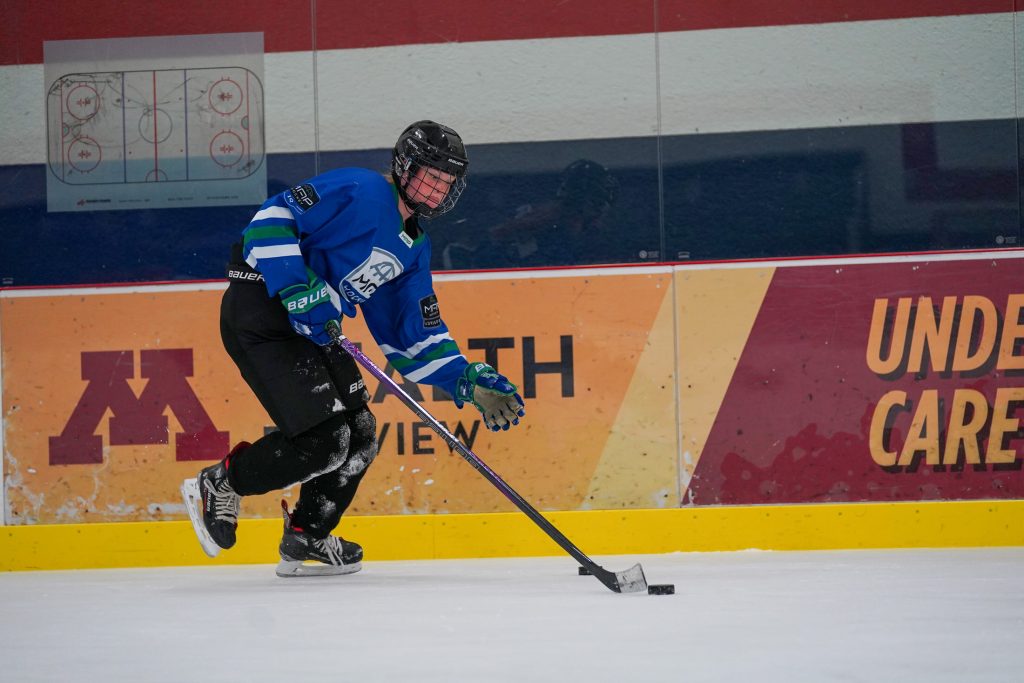
In a high school game, you might get a second or more after receiving a pass along the wall. Against older, stronger players, that window shrinks. The forechecker arrives sooner. The passing lane that was open when you looked closes before the puck gets there. A play that worked all season, carrying it one more stride before moving it, turns into a turnover.
Skills matter a lot here. Keep building your skating, your hands and your strength, because they’re essential at every level. But speed of thought is part of pace too. Players who keep up are often the ones who already knew what they’d do with the puck before it arrived.
Less room to fix a bad read
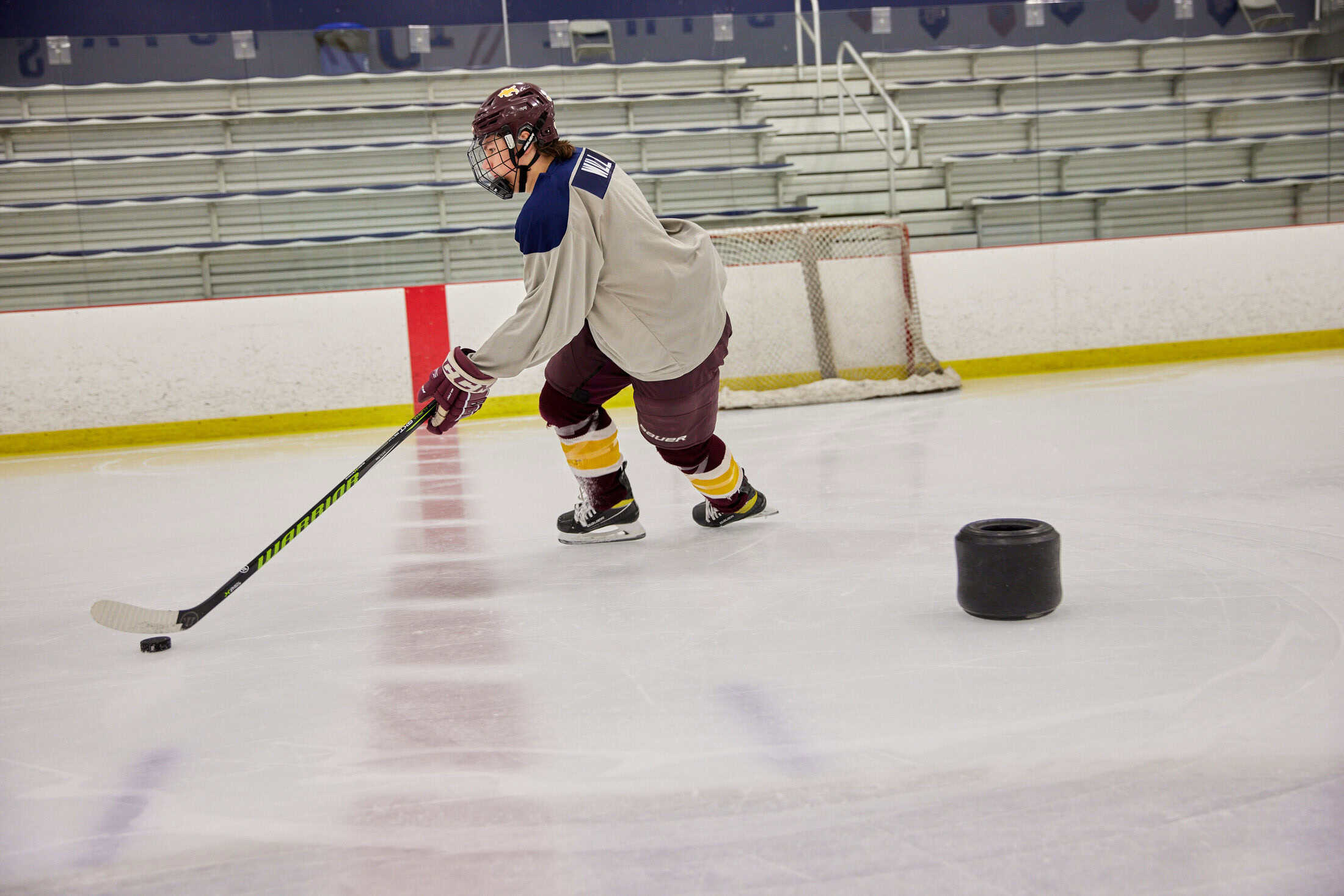
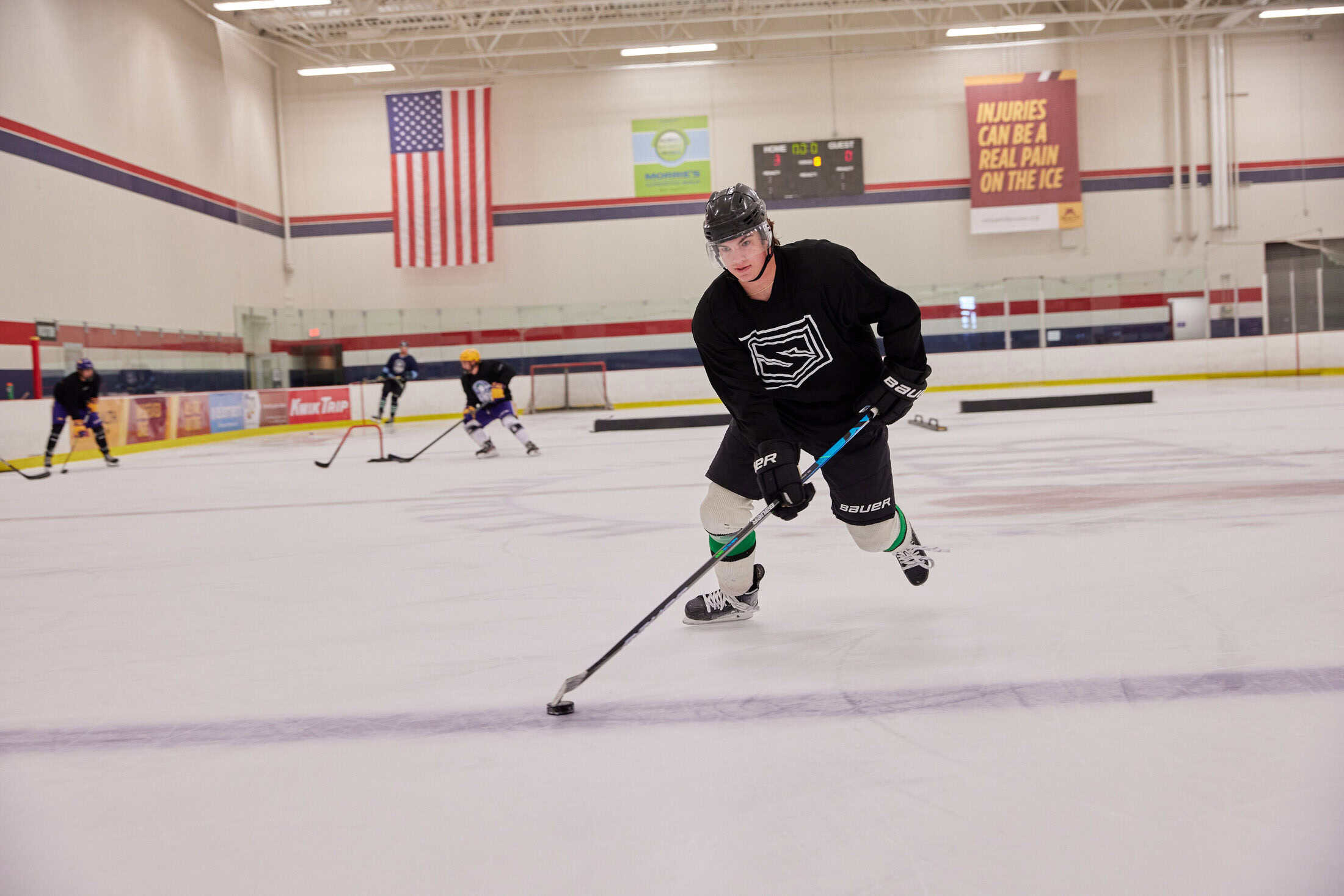
At a lower level, a step-late read can sometimes be covered by skating harder. You lose your check on the backcheck, then you outskate him to the net. You get beat wide, then you recover with a long reach.
As the competition gets faster, stronger and smarter, that recovery room tends to disappear. Everyone can skate. Small mistakes in positioning away from the puck become scoring chances. Gap control on a 1-on-1 matters more, because the forward coming at you can make you pay for an extra foot of space.
That’s why decisions start to separate players. Not because effort stops mattering, but because everyone at that level works hard.
Consistency gets noticed
One great shift is fun. A coach at any level usually wants to know whether they can count on you to make the right play over and over, in the third period of a tie game, on the penalty kill, on a breakout under pressure.
That kind of reliability comes from reads that have become habits. You check your shoulder on the way back for a dump-in every time, not just when you remember. You know where your support is on every breakout, not just the clean ones.
What you can start building now
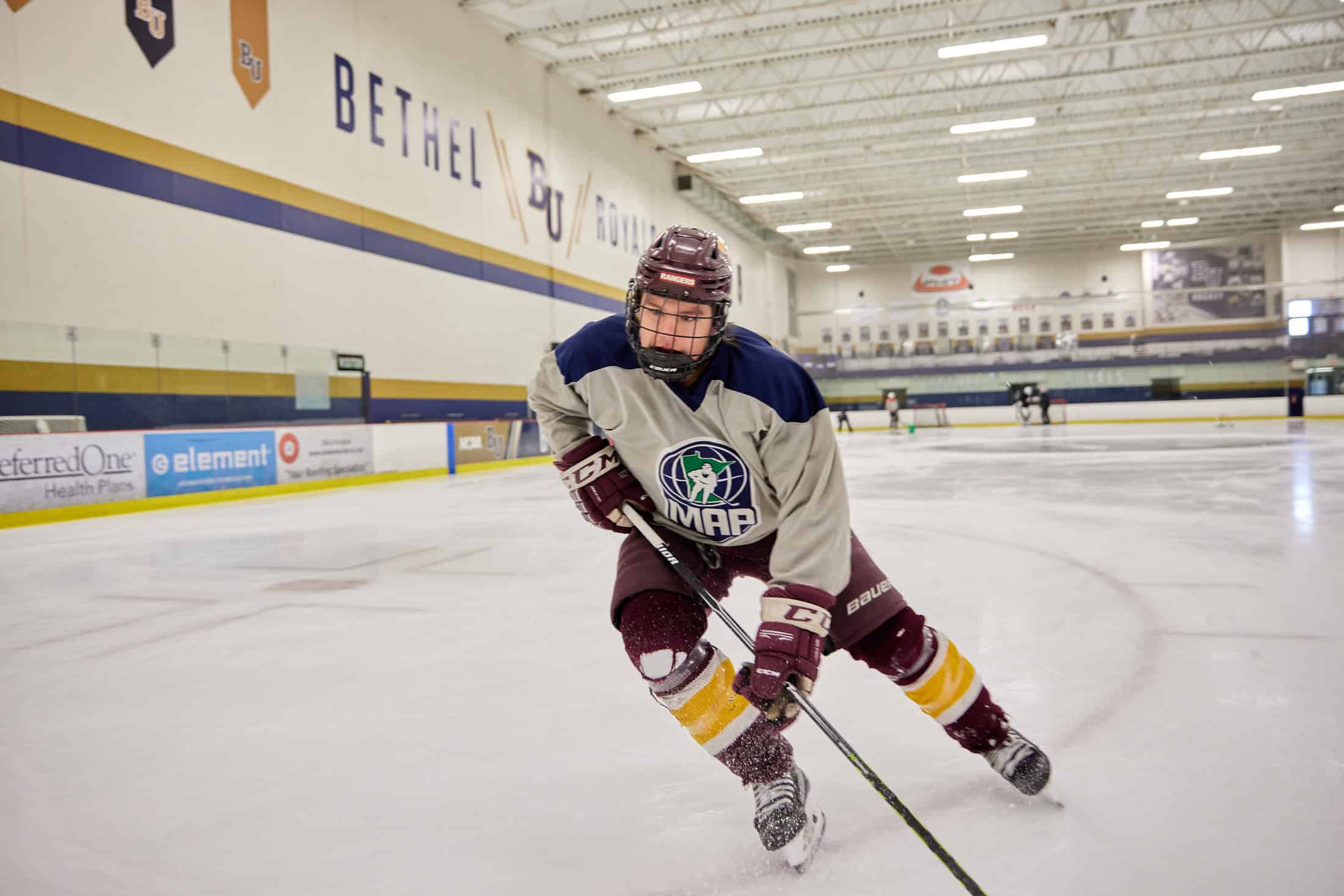
You don’t have to be on a junior roster to start preparing your reads. A few habits you can work on this season:
- Look before the puck arrives. Shoulder checks on retrievals, scanning the ice in the neutral zone. Know your next play before you get it.
- Move the puck a beat earlier. Watch for the moment you could have passed and didn’t. That beat is often the difference at the next level.
- Play the space, not just the puck. Away from the puck, ask where your linemate is going to need you, and get there first.
- Hold your gap with purpose. On defense, decide where you want the puck carrier to go and take away the other option.
- Review your own film. Pick a few shifts each week and ask what you saw, what you chose and what else was open.
If you feel stuck right now
Some players thinking about the next level are also stuck at this one. You do everything the coaches ask. You train hard. And you still feel like you’re not moving forward.
If that’s you, it’s fair to ask what you might be missing. Often it’s not something you’re doing wrong in practice. It’s a read in games that nobody has pointed out to you yet.
Where MAP Hockey IQ fits
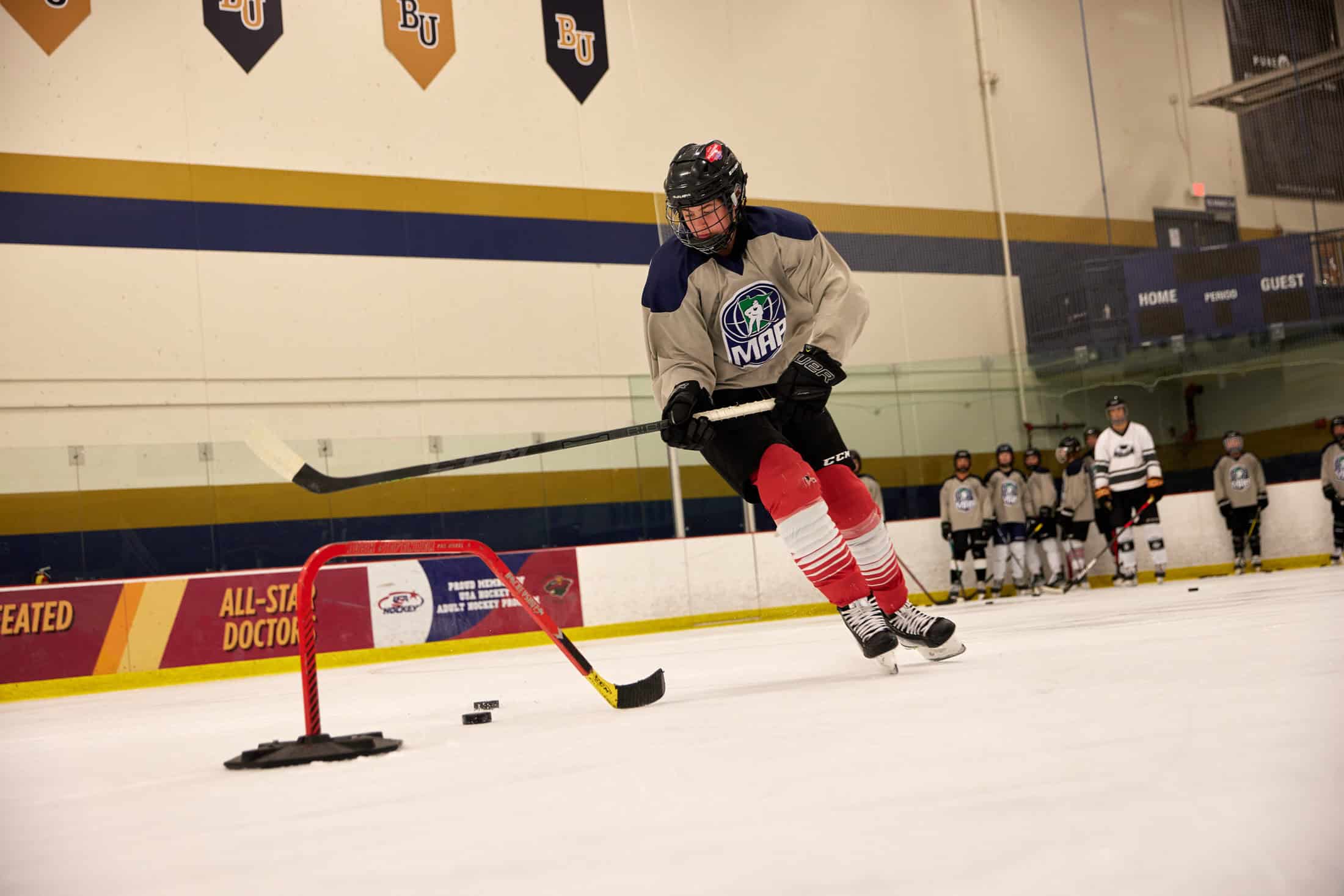
MAP Hockey defines the skill like this: “Hockey IQ is a player’s ability to make a read, process it, and then execute the right play.” MAP Hockey IQ coaching is personalized analysis of your own game footage by a MAP Hockey IQ coach, organized around the 4 Components of Hockey: offense at the puck, offense away from the puck, defense at the puck and defense away from the puck. Coaching moments from pro film show how high-level players handle the same situations you see on your shifts.
A MAP Hockey IQ coach can help you see what you’re missing in your game and give you a clearer idea of which reads to work on. It’s designed to complement your skills training and your team’s coaching.
It’s worth being clear about what it isn’t. Hockey IQ coaching doesn’t offer recruiting, placement or promises about a junior or college roster. Nobody can promise those. If your family wants help with the recruiting side, such as planning, mentorship and connections to teams and coaches, MAP Hockey offers that as a separate service called MAP Hockey Advising.
Start preparing your reads now
The next level will ask more of your skating, your strength and your decisions. Two of those you’re probably already working on. The third is worth the same attention, starting this season.
Learn more about MAP Hockey IQ and talk it over with your parents.