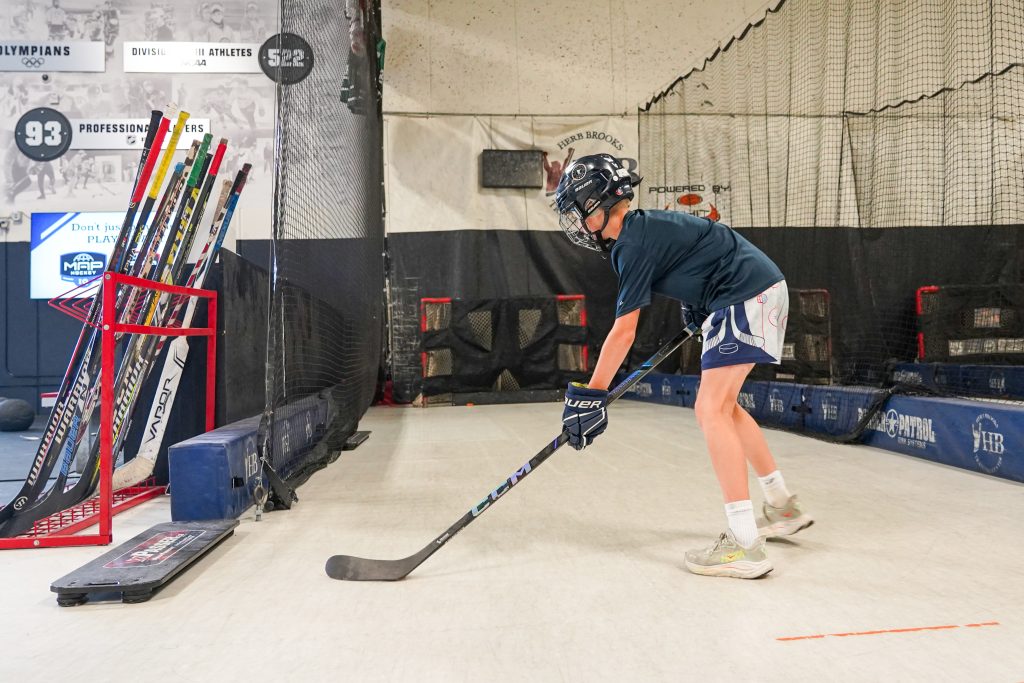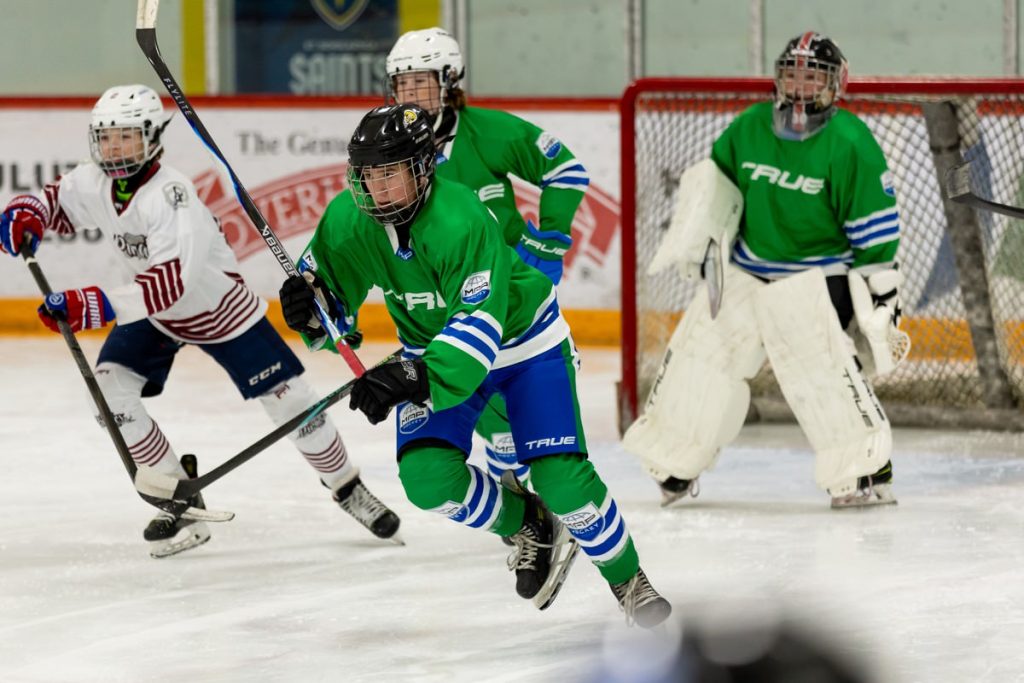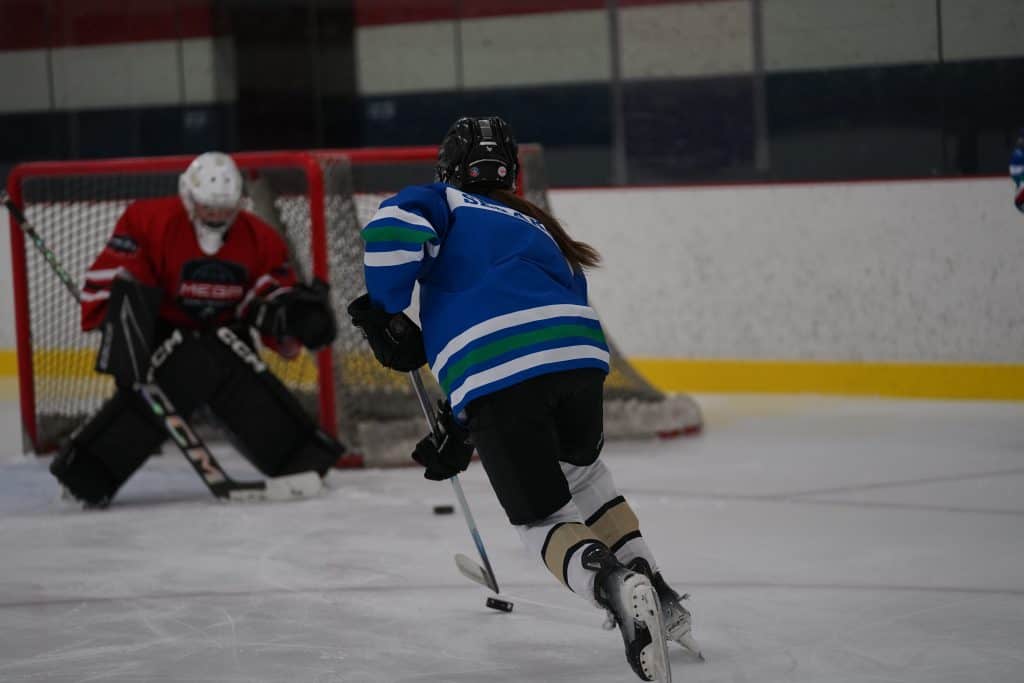
The last game of the high school season ends, and so does the structure. No more practice after school. No more bus rides. The coach says “have a good spring,” and you’re on your own.
For a lot of players, that’s when progress stalls. They still care. The trouble is that nobody owns the months between seasons.
The months nobody owns
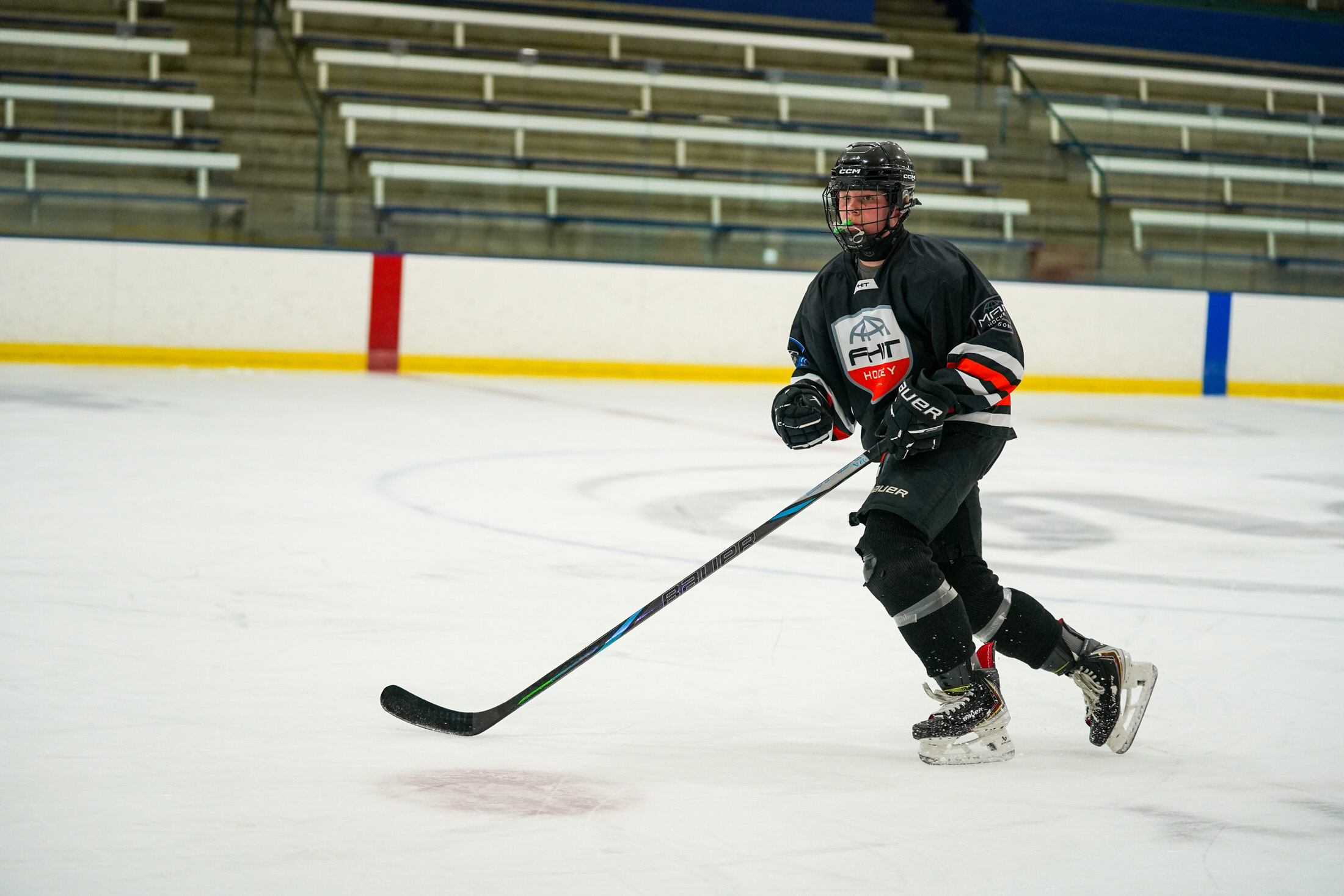
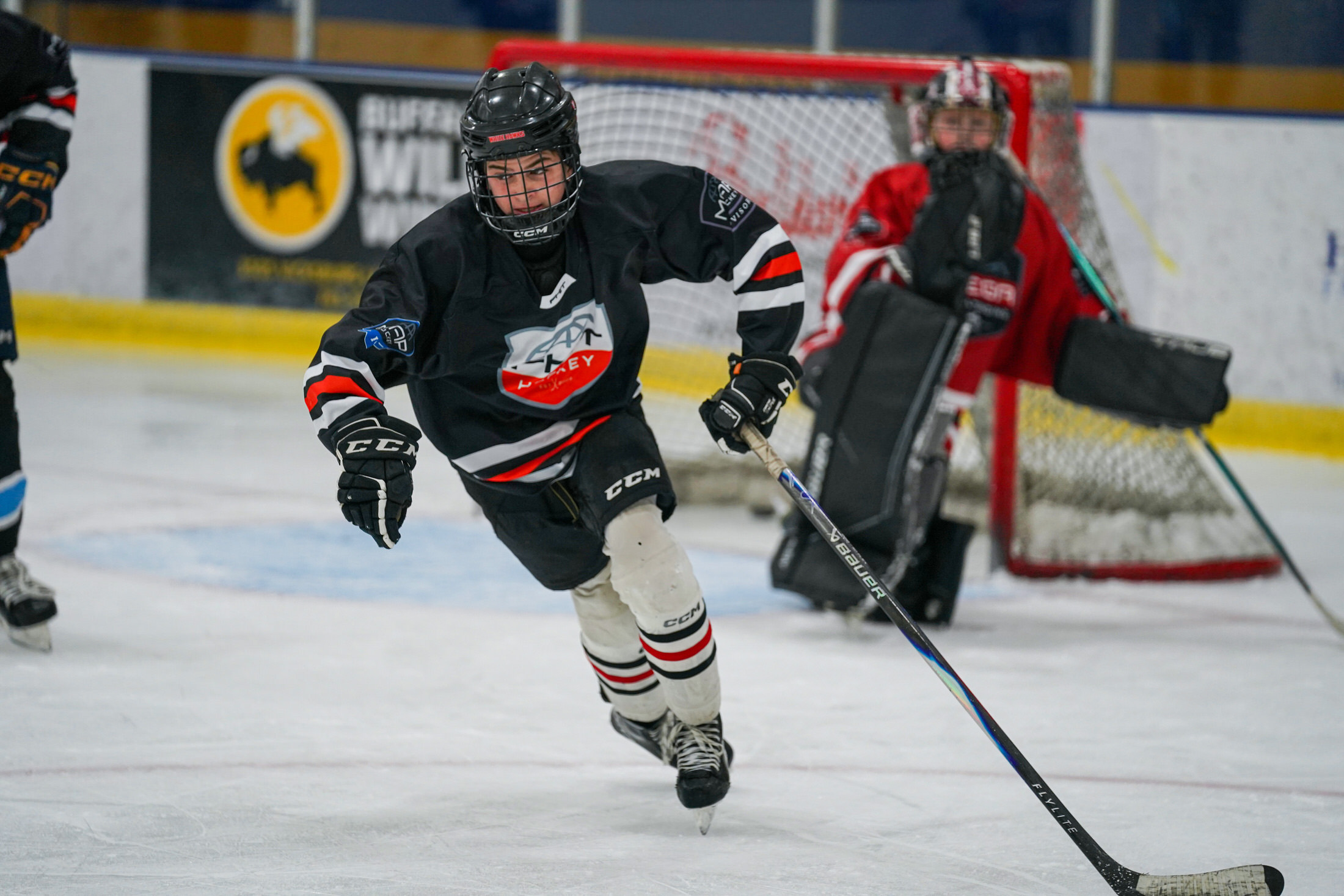
During the high school season, your week is organized for you. Practice times, game days, film if your coach does it. It’s a lot, but it’s clear.
Then it’s over. Some guys play spring hockey. Some lift on their own. Some take a few weeks off that turn into a few months. By the time fall tryouts come around, skills that felt automatic at the end of the season need to be rebuilt.
Skill sharpness fades fast without reps. Hands get slow. Edges get sloppy. Reads that used to be instant take a beat longer. You spend the first weeks of the next season getting back to where you were, instead of moving past it.
When the off-season actually starts
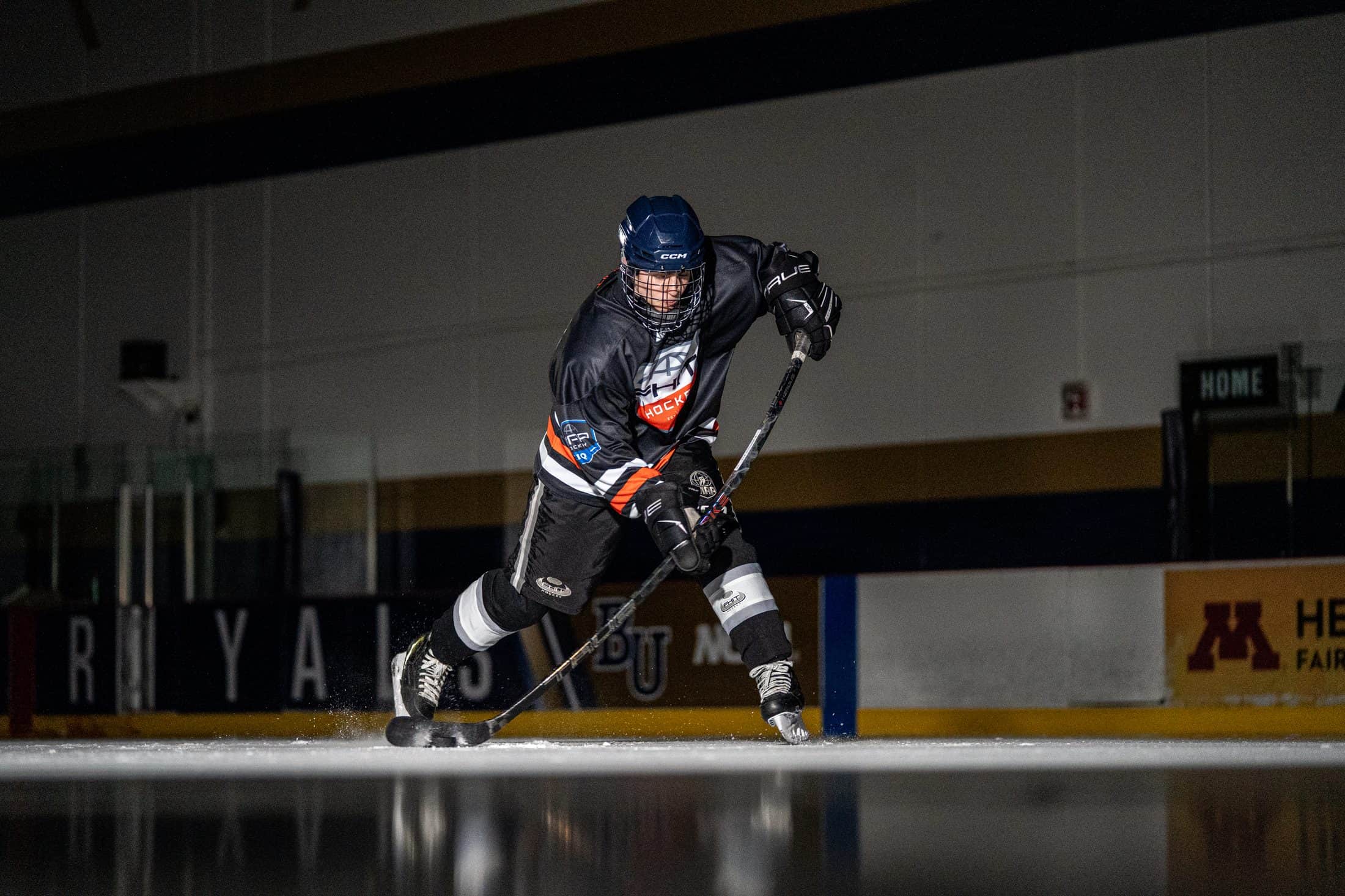
FHIT Hockey Membership is built around your year, not a calendar that ignores it. The off-season phase runs “from the conclusion of the High School season through the Fall.” In other words, it starts when your season ends.
The year has two phases. The off-season is eight months and covers:
- on-ice development
- strength & conditioning
- skill refinement
- Hockey IQ performance
- game situation training
The in-season phase covers the four months of the winter competitive season, while you’re playing for your school. It includes ongoing mentorship and guidance, individual game film analysis via MAP Hockey IQ, and customized strength and conditioning plans. Some services, film analysis among them, are listed on the program page as add-ons, so check there for what’s included.
The point is that someone else is holding the whole year. You don’t have to piece it together yourself, guessing whether to lift or skate or take a week off. For a lot of players, that’s the biggest relief. You show up, you do the work, and the plan is already there.
What a training day includes
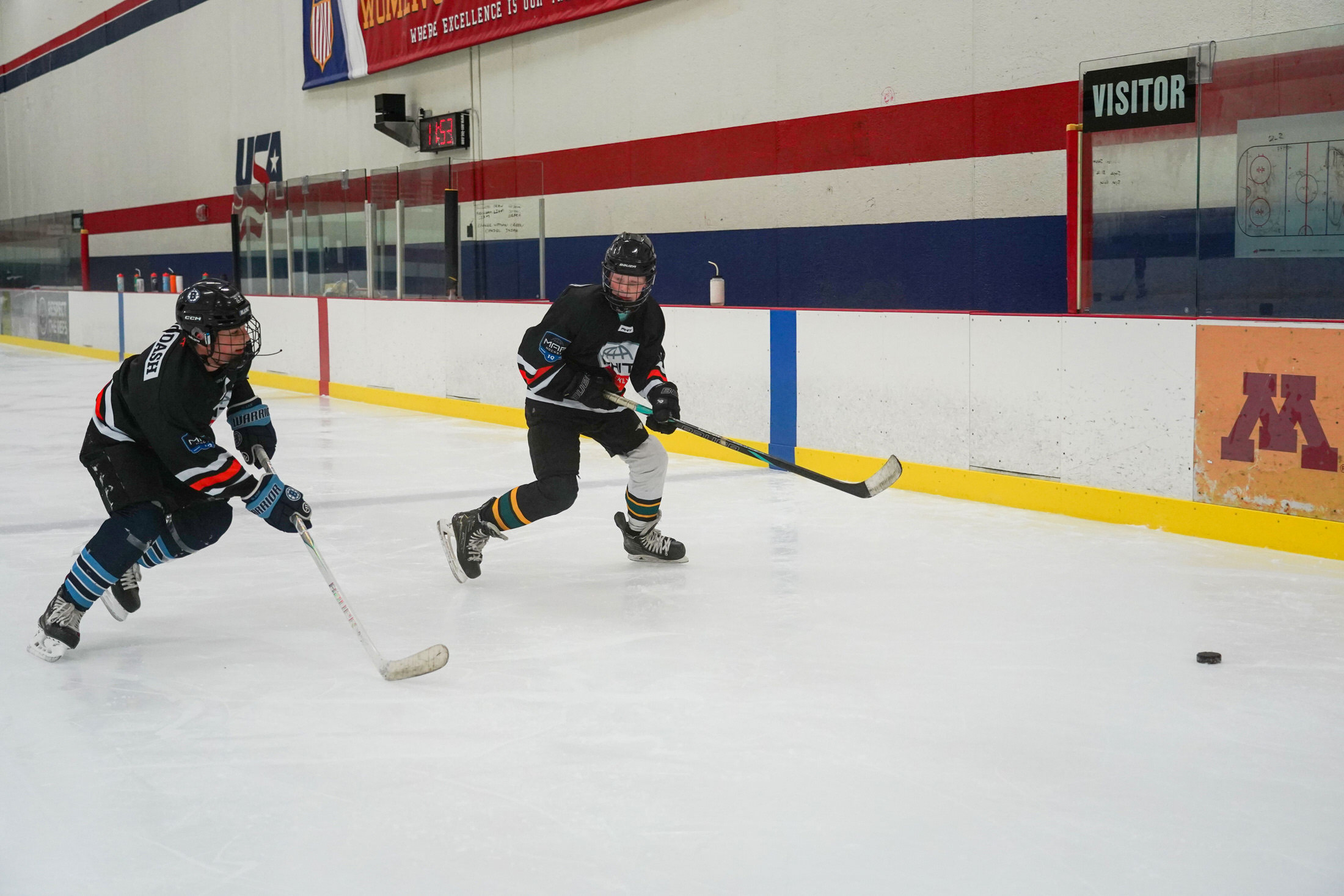
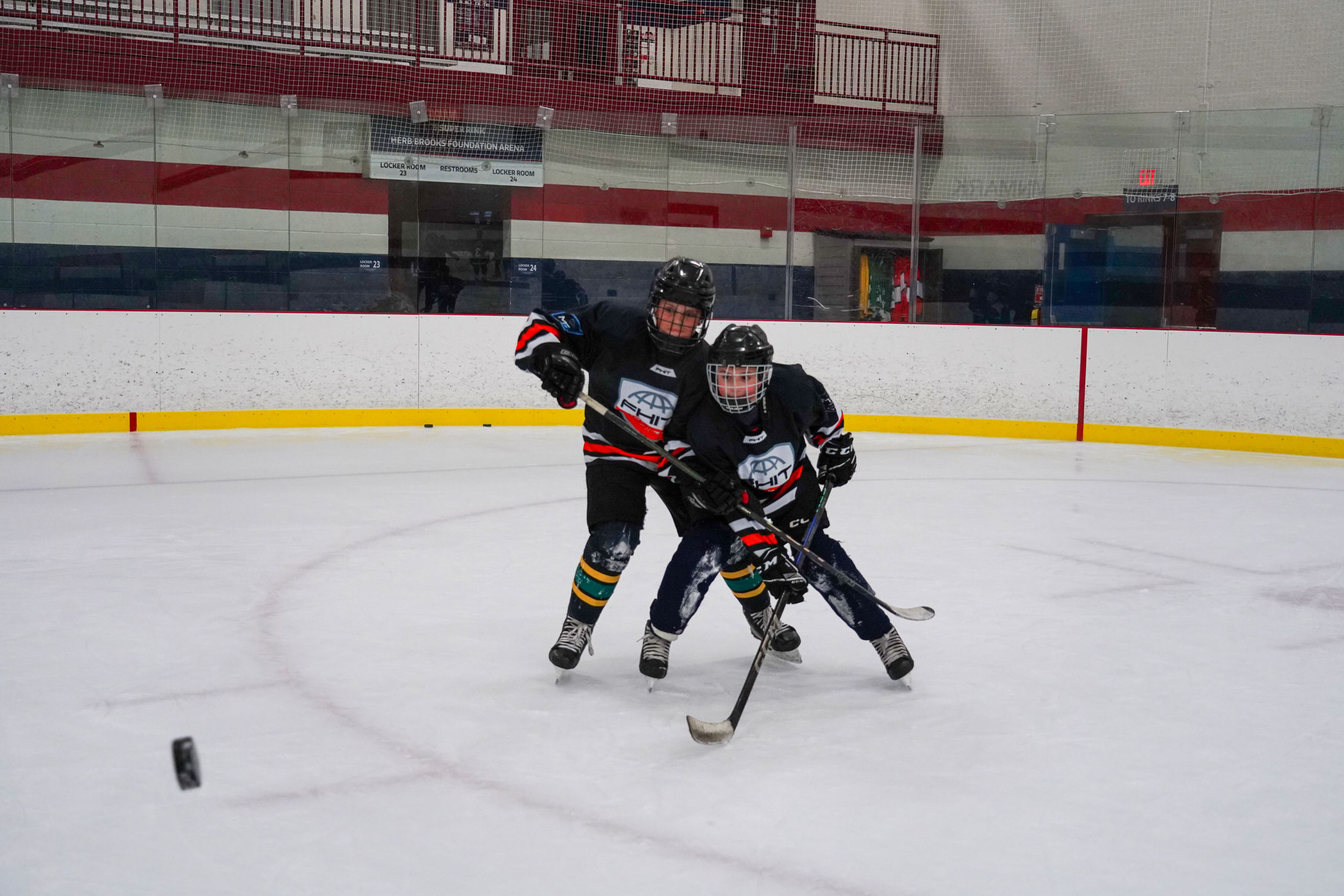
Each training day has three parts:
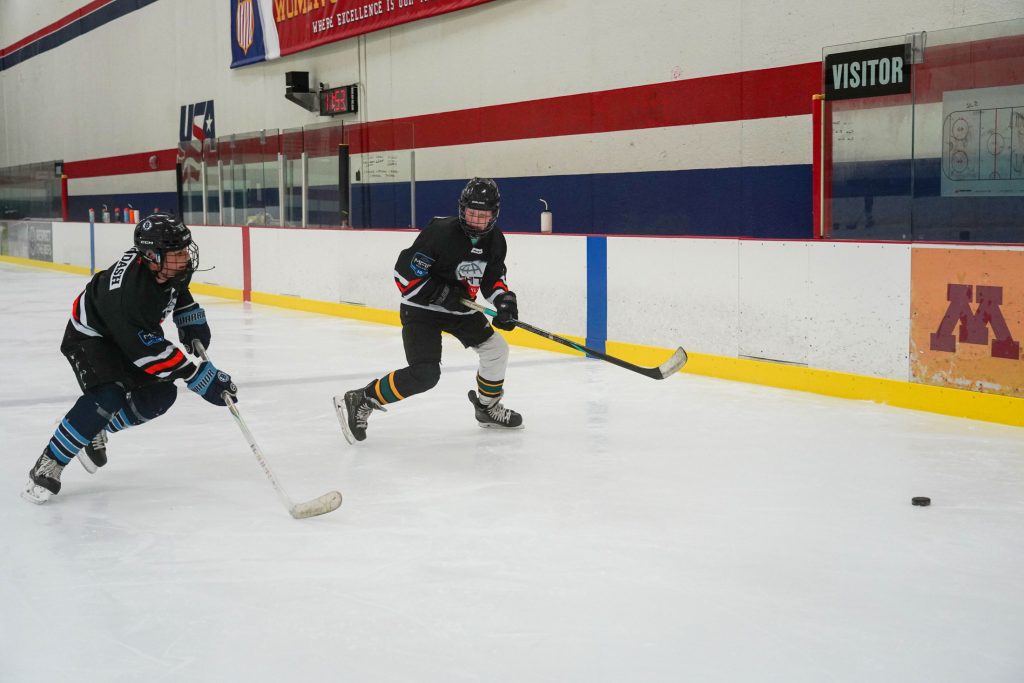
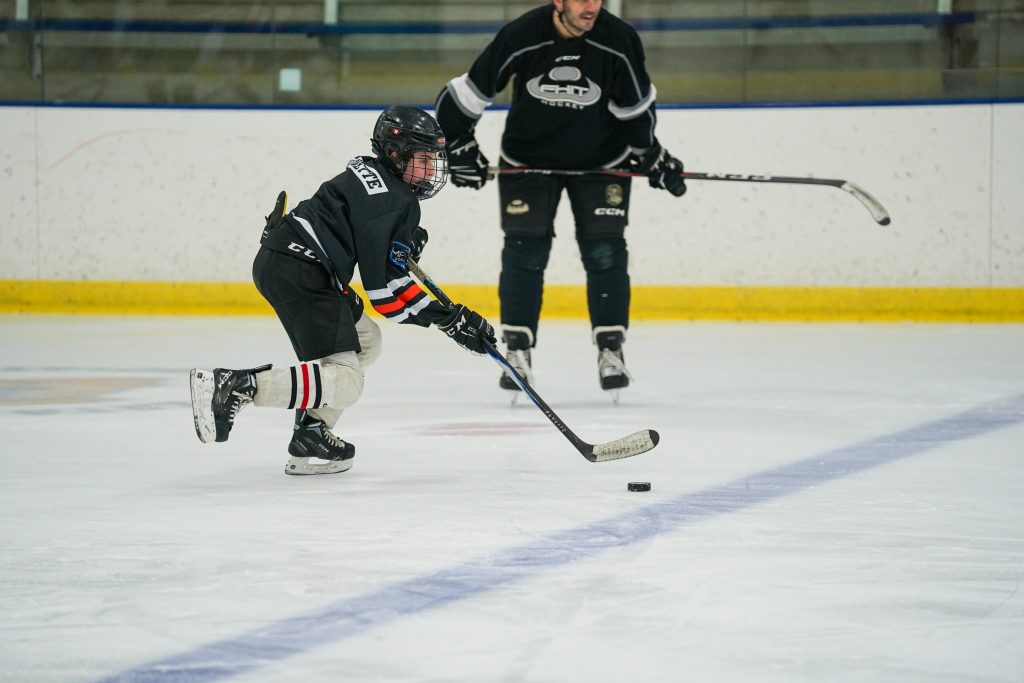
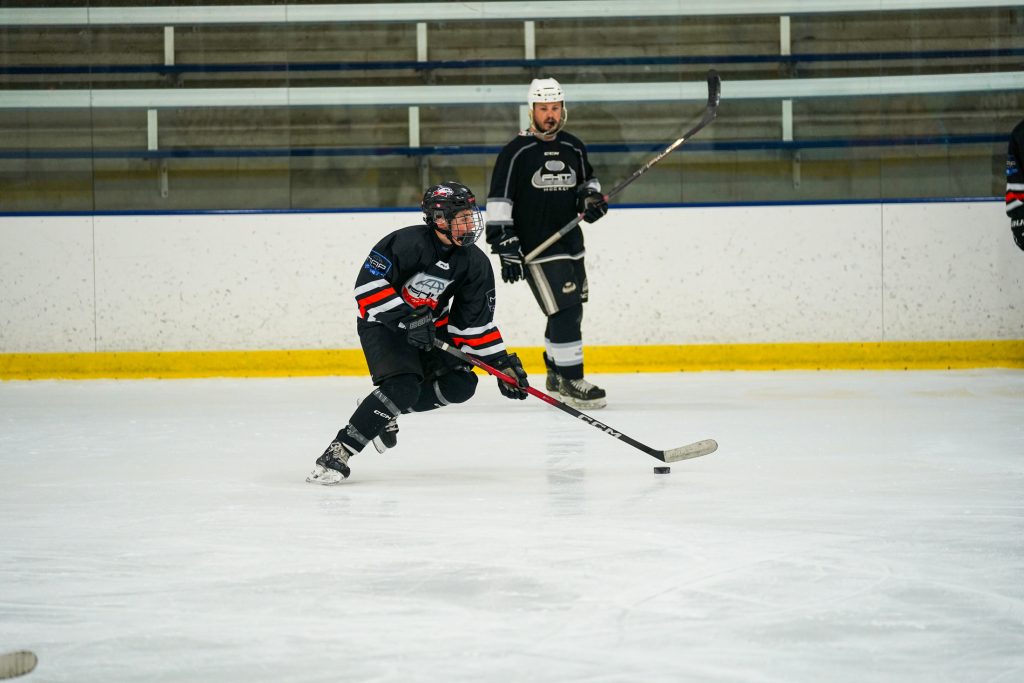
- 1 hour on-ice
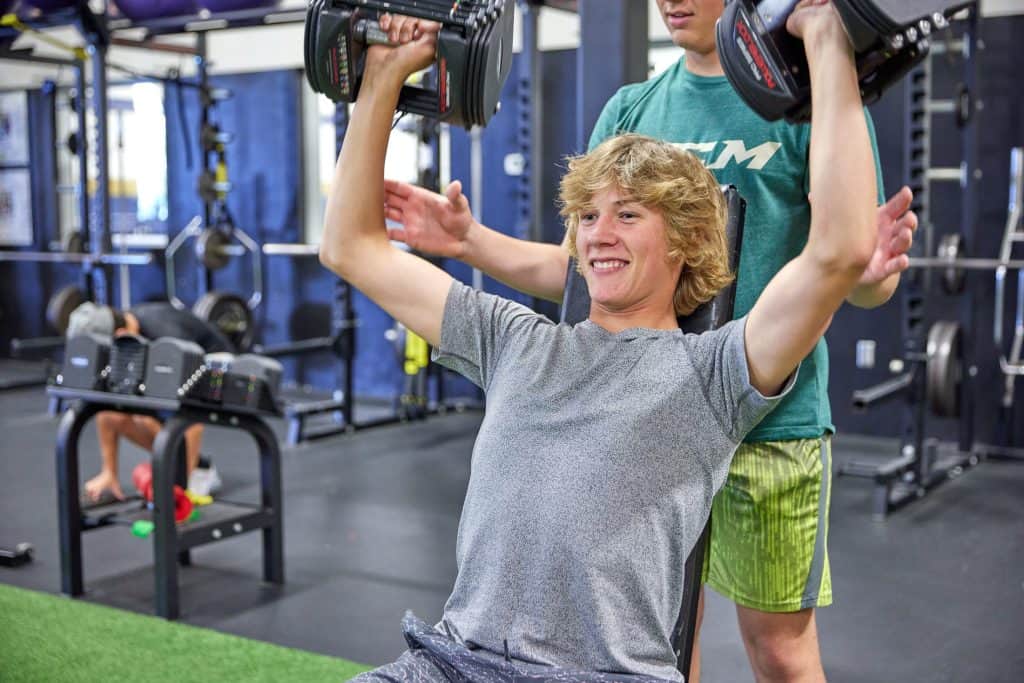
- 1 hour of off-ice strength and speed training
- 30 to 45 minutes of shooting and stickhandling
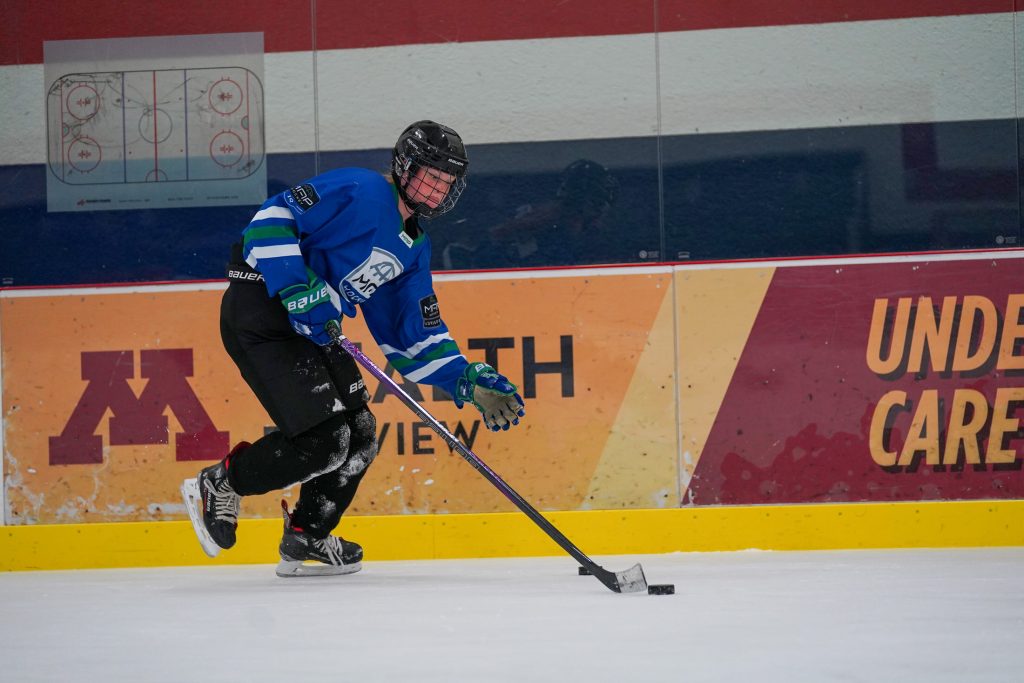
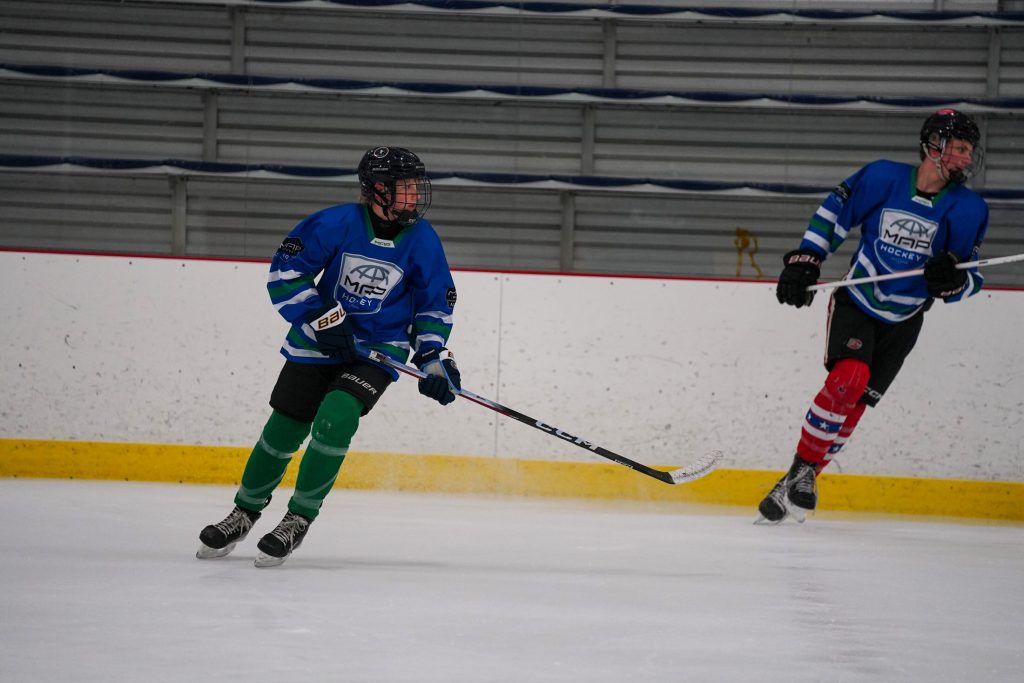
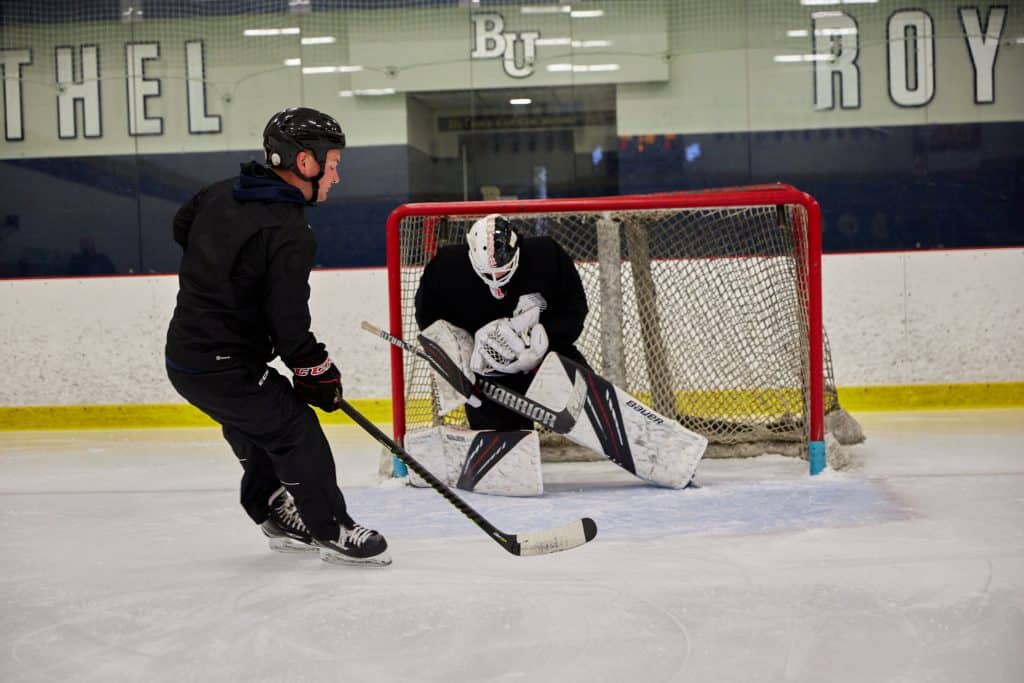
The on-ice hour is split into three 20-minute segments, in this order: skating development (edge work, speed and efficiency), position-specific skills in game situations, and competitive small-area games and decision-making.
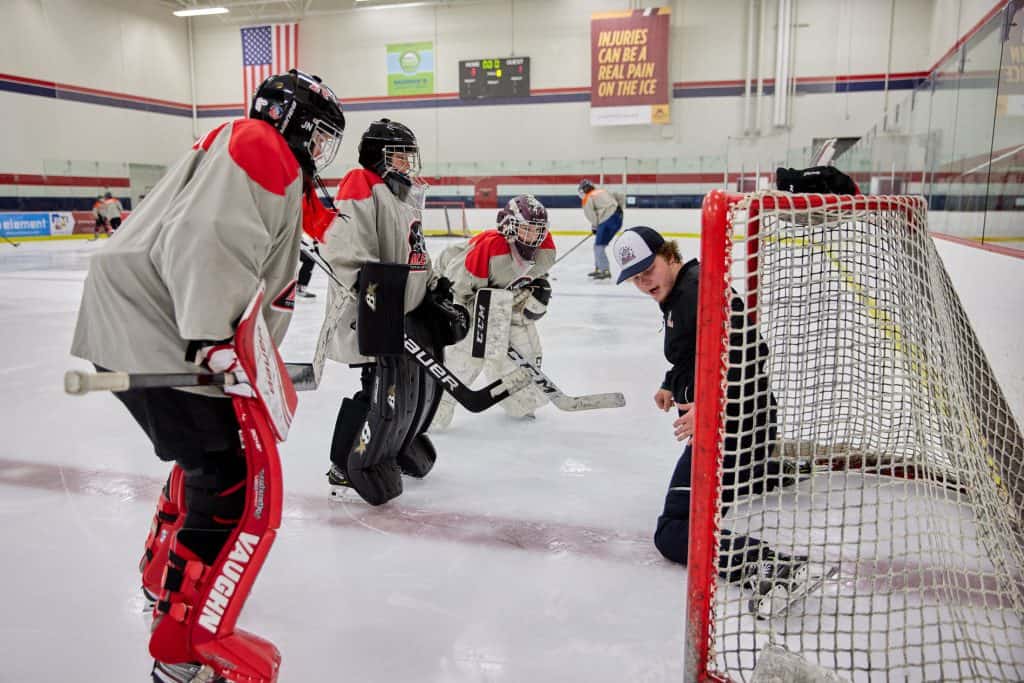
There are no more than eight players per coach.
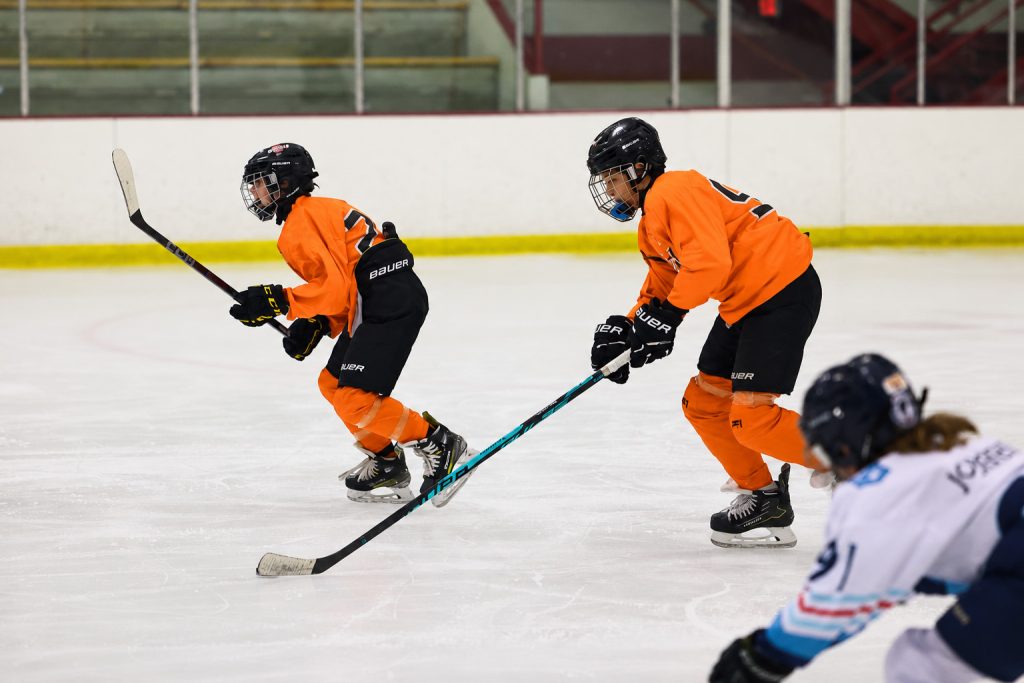
That last segment matters. Making the right decision under pressure is the hardest thing in hockey to practice, and team practice rarely has time for it. Small-area games put you in tight space with a defender on you and force a choice. Do it enough and the choice gets faster.
Off-ice work that fits on-ice work
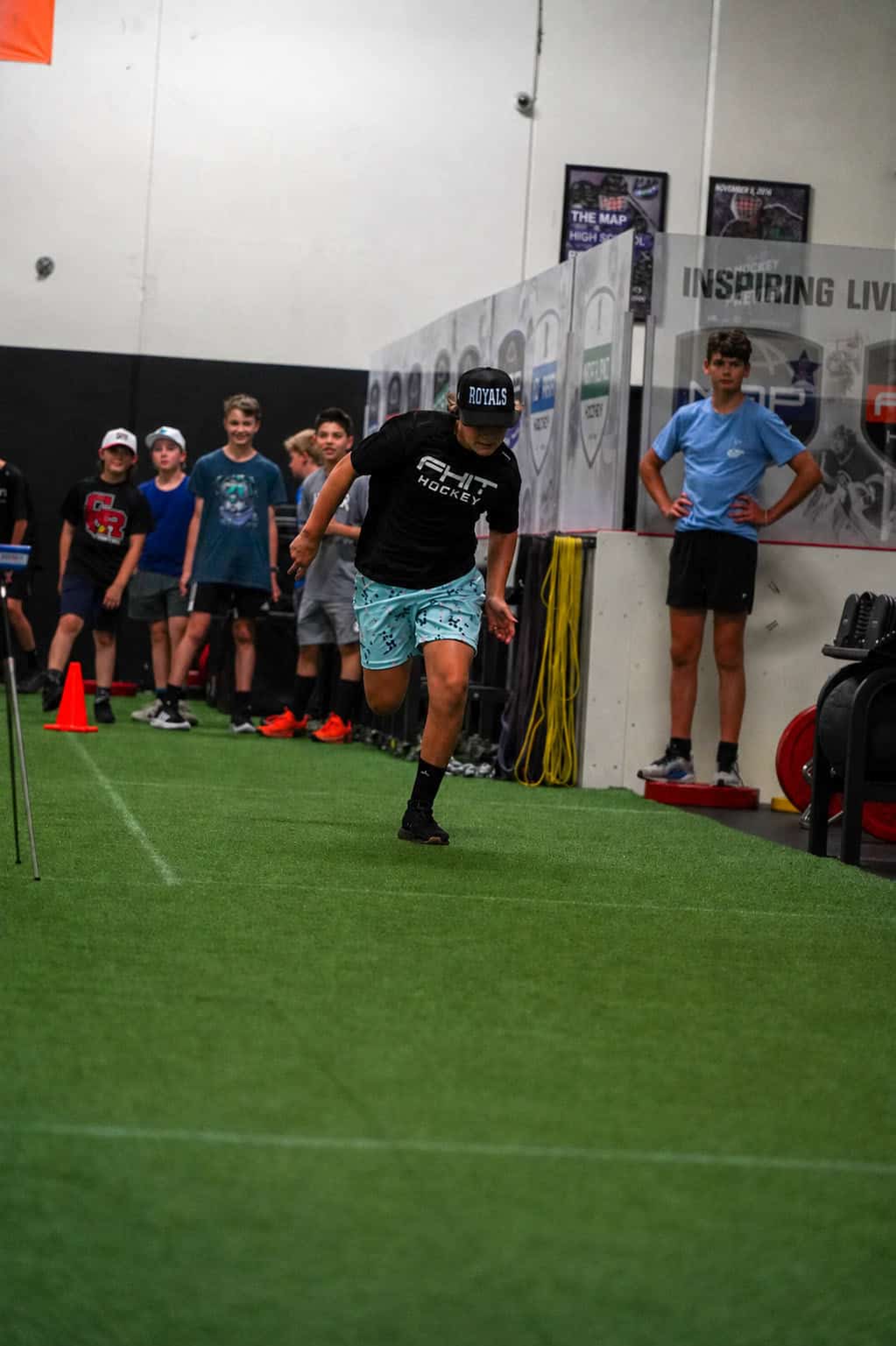
Plenty of high school players lift. Fewer lift in a way that connects to what they do on the ice. Strength and speed work bought separately, done on your own schedule or skipped when things get busy doesn’t add up the way it should. You end up with a bench press number you’re proud of and the same first step you had last year.
Hockey strength is specific. It’s holding your edge when someone leans on you along the wall, pushing off hard enough to win a race to a loose puck, and staying low through contact. Those come from training that was designed with the ice in mind.
Putting the off-ice hour in the same training day as the on-ice hour means the two are part of one plan. You’re not hoping your gym routine helps your first three strides. It’s built for that.
You’re busy, too. School, homework, maybe a job, maybe a social life. The program page says most players train two to three days a week, and the schedule is flexible. You don’t have to give up everything else to make it work.
Doing the work nobody sees
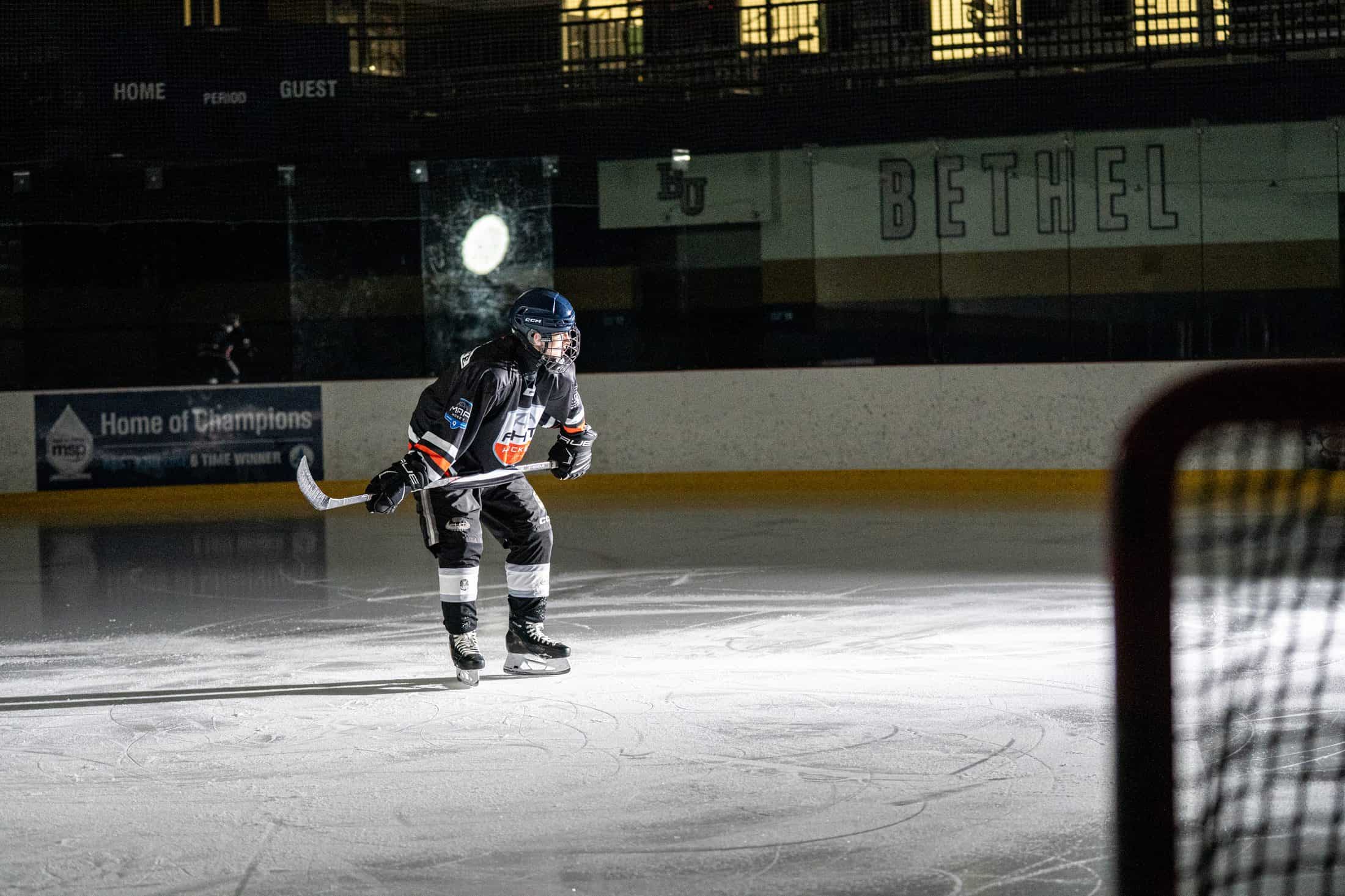
There’s a certain kind of pride in the work nobody watches. The early morning skates. The extra shots after everyone else has left. The lifts in an empty gym in the middle of summer.
Nobody claps for it. Nobody posts it. Your teammates might not even know you’re doing it. But it shows up later, in a battle you win in the corner or a pass you see a half-second sooner than you used to. The players who earn bigger roles usually put in that work long before anyone noticed. If you’re the kind of player who already does the extra stuff on your own, imagine what it looks like with a plan behind it.
If this sounds like what your off-season has been missing, read the full program page and bring it to your parents. They’re the ones who apply, and they’ll want to see the details. Learn more about FHIT Hockey Membership.